Domain 01
AI Product Architecture
Productized AI features tied to real workflows.
- AI agents
- AI-assisted workflows
- Content generation systems
- Human-in-the-loop design
- Productized AI features
RYKAZ turns complex cases into clear systemsSenior product architecture for AI, SaaS, learning and immersive platforms
I help founders, innovation teams, and product leaders turn complex AI, SaaS, learning, or immersive ideas into buildable systems.
I work on architecture, product scope, technical risk, AI workflows, vendor decisions, and execution roadmaps.
PhD Computer Science · R&D and technical product experience · France
Advisory journey
Six product hats for clarifying what to build, what to postpone, and what to avoid.
Advisory focus
Many teams can build a prototype. Fewer can turn AI features, immersive demos, learning standards, and SaaS constraints into a product that is usable, maintainable, and aligned with the business goal.
Insights
Technical Field Notes
AI-assisted authoring gets safer and more useful when the storyboard stops being a loose creative brief and becomes an inspectable execution contract for intent, scene flow, interactions, assets, and validation.
Technical Field Notes
Adaptive AI gets more useful when products distinguish explicit preferences, corrections, and noisy outcomes instead of treating every click, edit, regeneration, or rejection as the same instruction.
Technical Field Notes
If approval is treated as a pause between automation steps instead of a first-class workflow state, queued actions can outrun intent, publish stale payloads, or lose accountability, so approval needs evidence, expiry, revocation, and execution rules of its own.
Technical Field Notes
A production deploy can look healthy while the database is on the wrong schema, the seed path targeted the wrong environment, or the application is reading a state it never actually proved, so migrations need their own verification contract.
Technical Field Notes
A prototype should split into its own product when its primary user, decision loop, data boundary, and operating risk stop fitting the parent workflow, even if the interface still looks related.
Technical Field Notes
Expert content systems stay useful when approval depends on evidence, mechanism, limitations, diagnostics, and next-action quality instead of fluent text alone.
Technical Field Notes
Generated PDFs deserve product-level design because visually correct output can still break links, hierarchy, accessibility, machine readability, and user trust across the editor-to-export pipeline.
Technical Field Notes
A matching score becomes useful only when it carries evidence, confidence, missing data, and a next action instead of pretending one number can safely summarize the whole decision.
Technical Field Notes
Childcare, care, and home-service marketplaces earn trust when verification, status design, communication boundaries, local relevance, and exception handling are built as product architecture instead of being left to profile volume and messaging alone.
Technical Field Notes
Multi-provider AI failover works only when each feature has an explicit quality floor, cost ceiling, latency policy, and user-visible degradation rule instead of silently swapping models behind the same product promise.
Technical Field Notes
AI assistants inside authoring and operational products work better when they receive a task-scoped, permission-aware context packet instead of the full application state tree, because selective state preserves relevance, safety, and recoverable behavior.
Technical Field Notes
AI-assisted research and content systems need a governed resource inbox with ownership, allowed-use, intent, and lifecycle metadata before generation starts, or they will turn convenient source collection into trust, rights, and review debt.
Technical Field Notes
Senior technical interview preparation becomes more valuable when each question turns into a reusable architecture note with assumptions, trade-offs, evidence, and decision triggers instead of a memorized answer.
Technical Field Notes
Immersive scenes feel spacious, but usable XR and 3D products still need explicit hierarchy, progressive disclosure, and modal focus rules so presence does not turn into navigational noise.
Technical Field Notes
Production tracking tests stay useful when verification events are preserved for auditability but isolated from the business metrics that guide product and growth decisions.
Technical Field Notes
AI career products become more trustworthy when they expose evidence, gaps, assumptions, edits, and next actions instead of pretending to replace the user's judgment.
Technical Field Notes
Private technical work becomes credible public insight only when teams separate what was proved, what was tested internally, what is reasoned design, and what is still unknown.
Technical Field Notes
A page becomes agent-ready when it exposes explicit facts, canonical ownership, crawlable proof, and a clear next step instead of stuffing generic copy for algorithms.
Technical Field Notes
Adding more job sources usually lowers search quality unless normalization, provenance, freshness, deduplication, and failure isolation are designed as first-class product contracts.
Technical Field Notes
A build can succeed while permissions, data effects, observability, rollback, cost controls, and user-facing truth still fail, so release readiness needs explicit evidence across the whole operating path.
Technical Field Notes
Document intelligence becomes trustworthy when teams separate extracted facts, generated recommendations, editable content, and final rendering instead of collapsing everything into one locked output.
Learning Systems
An immersive viewer can deliver scenes, but operational learning products need interoperability across authoring, learner state, assessments, analytics, identity, and LMS workflows.
Technical Field Notes
AI personalization gets more reliable when teams separate durable constraints, inferred preferences, and task-local choices instead of stuffing a full user profile into every prompt.
Learning Systems
WebXR exposes sessions and input primitives, but immersive products still need their own interaction model for focus, selection, fallback controls, and learning-safe state changes.
AI Product Architecture
Human review belongs inside the product state model of an AI workflow, not as an informal cleanup step after output is already treated as truth.
Technical Field Notes
Agent reliability depends more on tool clarity, state awareness, and failure contracts than on the size of the tool catalog.
Technical Field Notes
Automations and browser admins can share the same authorization boundary, but they should not share the same session mechanism, trust assumptions, or audit path.
Technical Field Notes
Models, interfaces, and agent frameworks keep changing; the durable advantage comes from workflow contracts, evaluation, and human control rather than from model-specific prompting tricks.
Technical Field Notes
A broad prototype portfolio becomes useful when each concept carries an explicit hypothesis, risk, status, and next decision instead of staying as a permanent showcase.
Technical Field Notes
AI lowers the cost of first attempts, but real leverage still depends on who controls tools, data, evaluation, approval, and the right to change real system state.
Technical Field Notes
WebSockets, SignalR, and pub-sub can move events quickly, but durable collaboration still depends on server-owned operations, replay rules, and state reconciliation.
Technical Product Leadership
Useful architecture documentation answers live operating questions: where state lives, how releases move, what breaks first, and who owns recovery.
Learning Systems
LTI, SCORM, xAPI, and cmi5 can transport launches and results, but reliable learning products still need an internal state model for progress, completion, scoring, and replay.
Technical Field Notes
Metering AI usage is necessary, but trustworthy monetization depends on a product contract that defines billable actions, refunds, entitlements, and free exploration.
Technical Field Notes
A practical architecture pattern for giving coding agents durable repository context, impact awareness, and resumable handoffs instead of repeated blind scans.
Technical Field Notes
A practical pattern for turning explicit visitor choices into a structured advisory brief instead of a vague contact form or hidden lead score.
Technical Field Notes
A practical pattern for letting admins review the real article page before publication while keeping drafts out of public listings, analytics, and search indexes.
Technical Field Notes
A practical trust-boundary model for teams using AI to draft content without letting generation automatically become publication.
Technical Product Leadership
A practical decision-log method for resolving architecture choices quickly, preserving the reasoning, and reopening them only when the assumptions change.
AI Product Architecture
A practitioner's method for deciding when an AI feature is ready for users: build an evaluation set, agree a failure budget, and ship behind a control point.
Learning Systems
A practitioner's method for turning a growing video library into a searchable knowledge layer that learners can query and the platform can measure.
Technical Product Leadership
A practitioner's method for deciding which technical debt to pay down now, which to leave, and how to fund the work without a freeze.
Technical Product Leadership
A practitioner's framing for deciding when to build, when to buy, and when reversing a vendor choice will cost more than the feature itself.
Technical Product Leadership
A clear distinction for recruiters and founders evaluating technical product leadership needs.
Learning Systems
How immersive media becomes a learning product when authoring, runtime, analytics, and LMS standards work together.
SaaS & Product Strategy
A product architecture lens on why promising prototypes stall when they meet users, operations, integrations, and support.
AI Product Architecture
A practical framing method for converting an AI concept into workflows, boundaries, risks, and delivery decisions.
Expertise
Each domain is a decision surface: what to build, where risk sits, how users move through the system, and what the team needs to execute next.
Domain 01
Productized AI features tied to real workflows.
Domain 02
LMS, standards, analytics, and adaptive learning flows.
Domain 03
Authoring, runtime delivery, and web immersive systems.
Domain 04
From MVP scope to scalable product architecture.
Consulting formats
For existing products, prototypes, or technical plans.
For teams before they build.
For startups and innovation teams needing ongoing support.
Selected product evidence
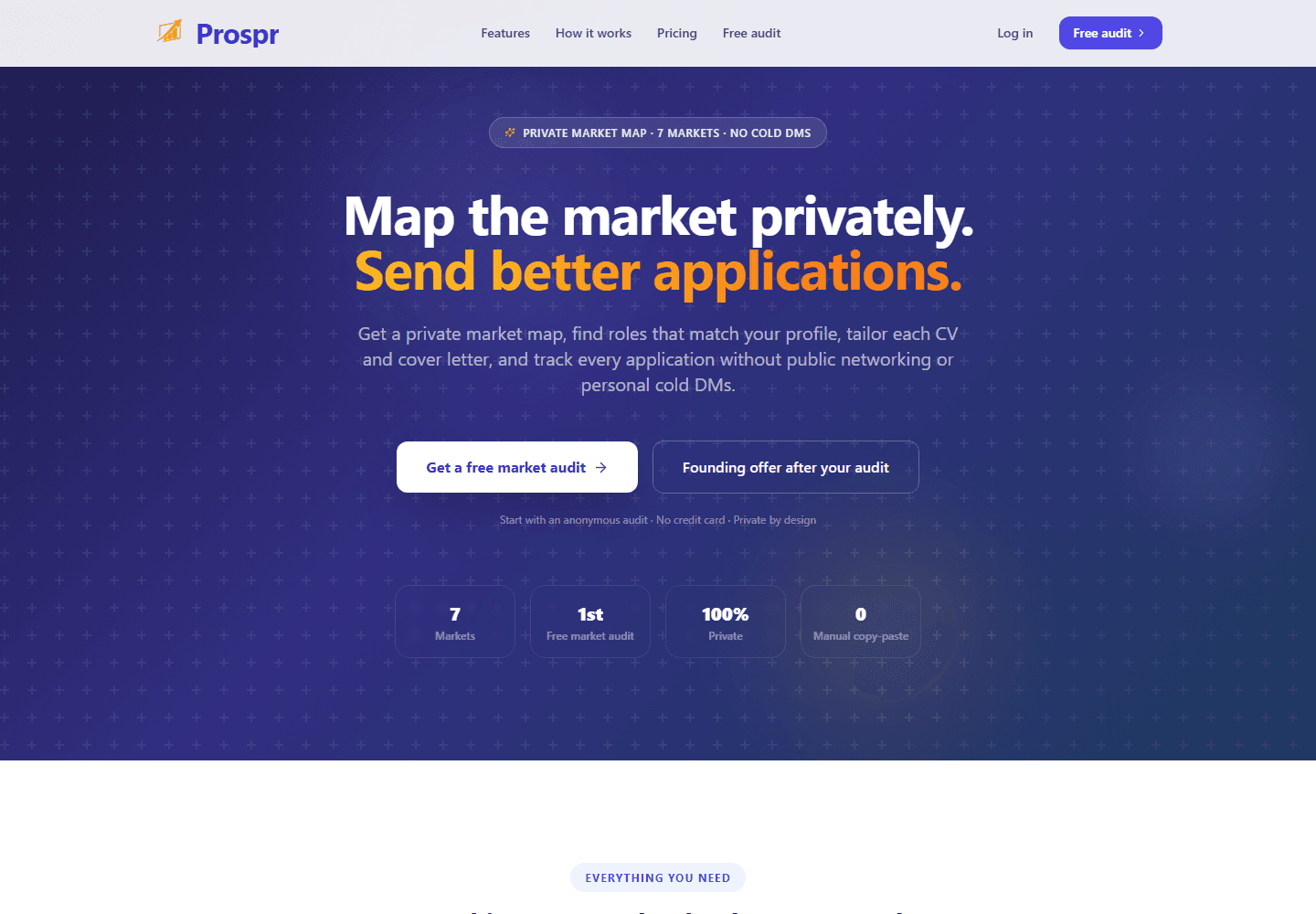
Prospr
Online product
Prospr turns job-search uncertainty into structured AI-assisted positioning, search, and application workflows.
AI Product Architecture
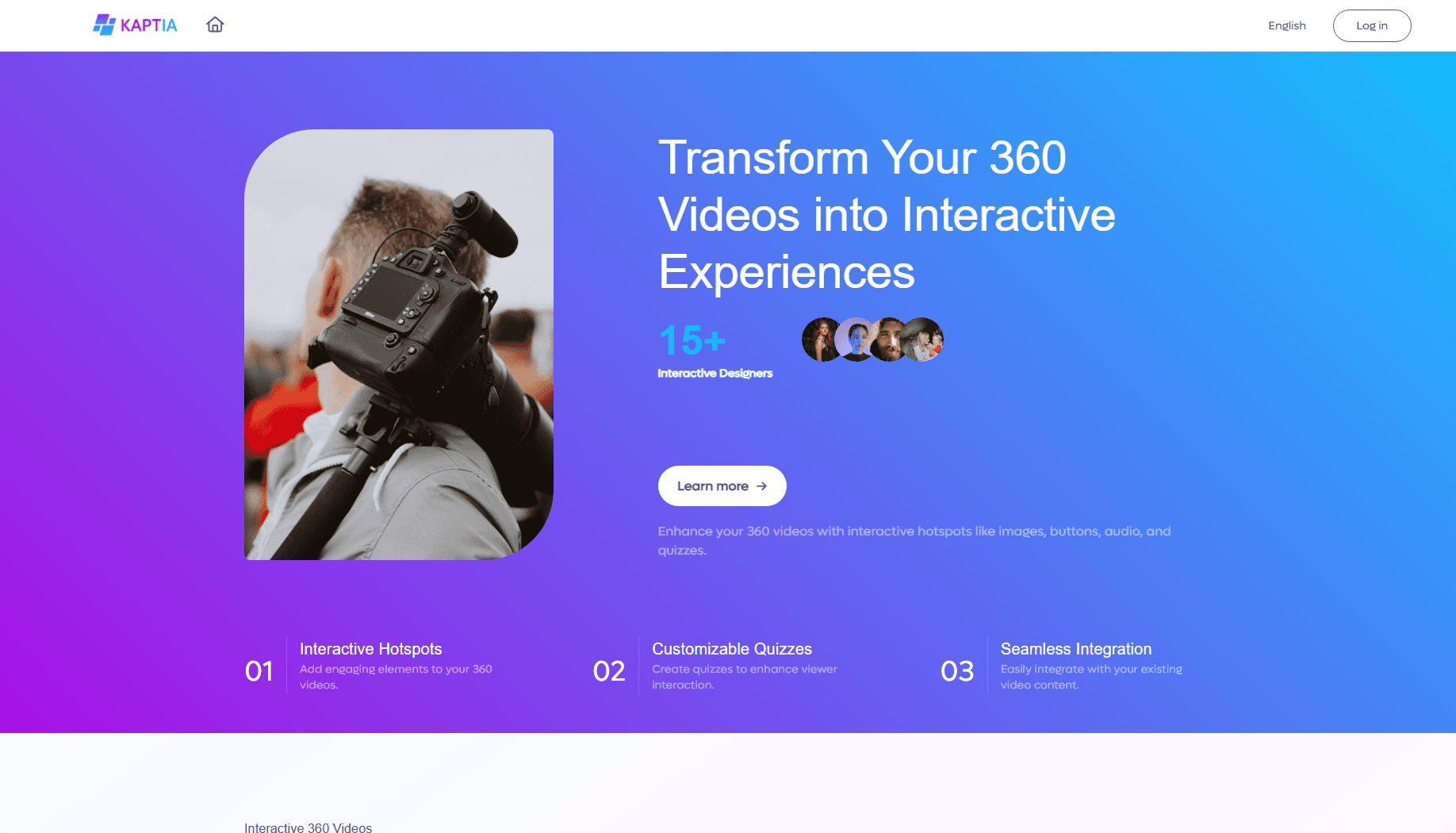
Kaptia / IA Learning
Online professional work
Kaptia / IA Learning turns 360 videos into interactive learning experiences with hotspots, buttons, audio, quizzes, and web delivery.
Immersive / XR Platforms
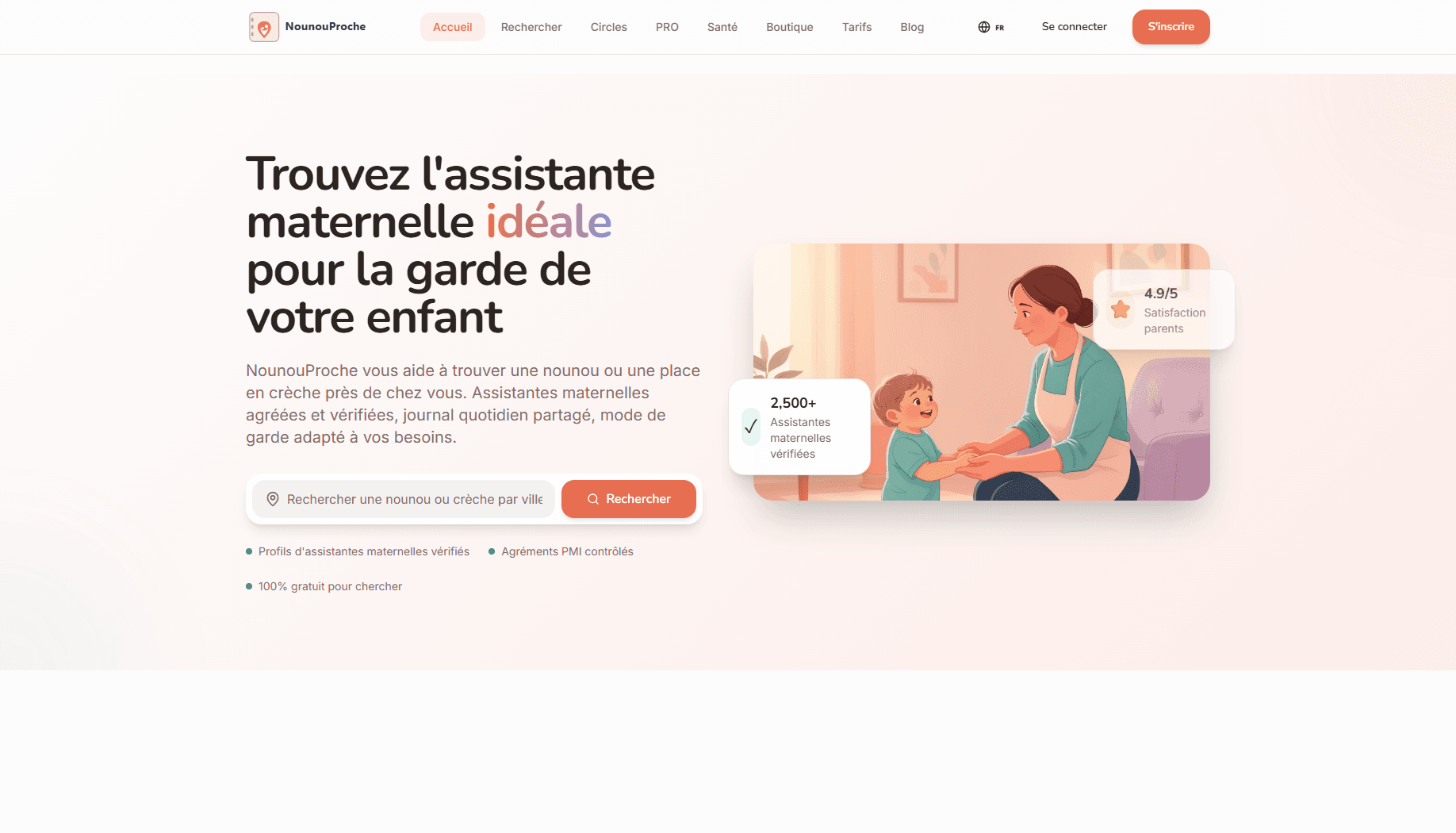
NounouProche
Online product
NounouProche maps marketplace trust, local childcare search, parent workflows, and family-service operations into a public SaaS product.
SaaS & Product Strategy
HomyHon
Online product experiment
HomyHon guides French property buyers through pre-offer risks, renovation questions, financing context, and decision checkpoints.
AI Product Architecture
WasteLess
Prototype
WasteLess scans grocery receipts and turns purchases into personalized waste-reduction tips, savings estimates, and habit guidance.
AI Product Architecture
InvoiceHub
Prototype
InvoiceHub explores invoice and receipt digitization, banking and payment flows, transaction history, and spending insights.
SaaS & Product Strategy
CareFlow
Prototype
CareFlow explores hospital communication, staff workflow, and companion notification patterns for patient-family coordination.
Learning Systems
Knozy
Prototype
Knozy explores waiting-room engagement, patient education moments, and local healthcare communication surfaces.
Learning Systems
BrightSpark
Prototype
BrightSpark explores accessible bilingual learning for children with visual or neuro-developmental needs through adaptive exercises and parent progress tracking.
Learning Systems
Ma Vie Facile
Prototype
Ma Vie Facile is a calm mobile PWA concept for unemployed mothers in France, with daily routines, health reminders, French practice, administration, goals, well-being, and parenting support.
Learning Systems
Squad 90-Day Challenge
Prototype
Squad 90-Day Challenge explores family or group habit change through simple onboarding, fitness, health, and shared motivation.
SaaS & Product Strategy
E-Learning
Prototype
E-Learning material supports LTI, SCORM, xAPI, analytics, and adaptive learning positioning.
Immersive / XR Platforms
Request a proposal
Describe the context, constraints and decisions that need clarity. You get a recommended engagement format, and I receive the substance needed to prepare a serious reply.
The form prepares a structured request. No prices are shown publicly: pricing belongs in the final proposal.
Recommended format
Light monthly retainer
Short alignment phase, scope still to clarify.
After submission, I directly receive a structured, high-priority brief. Pricing is added privately in the final proposal.
Recruiter path
This portfolio is consulting-oriented, but it also gives recruiters a direct path to evaluate roles where roadmap discipline, architecture depth, AI workflows, learning systems, or immersive platforms need one accountable technical product owner.
Roles I fit
Profile materials
CV and role-specific documents are available on request. I keep private job-search PDFs out of the public site until they are reviewed for the target role.
Request CV / profileContact
Use the brief form to share the context, constraints and decisions that matter. I will respond around the architecture, roadmap and execution path.